
Definition, Formula, and How to Calculate Discounted Cash Flow for Business Decision-Making
Aug 18, 2026

The way companies create value has undergone significant change. Where physical assets such as land, buildings, machinery, and equipment were once the primary indicators of business strength, many companies now derive their competitive advantage from assets that cannot be physically touched. Strong brands, innovative technologies, software, intellectual property rights, customer data, and long-term consumer relationships have become increasingly decisive factors in corporate success in the digital economy era.
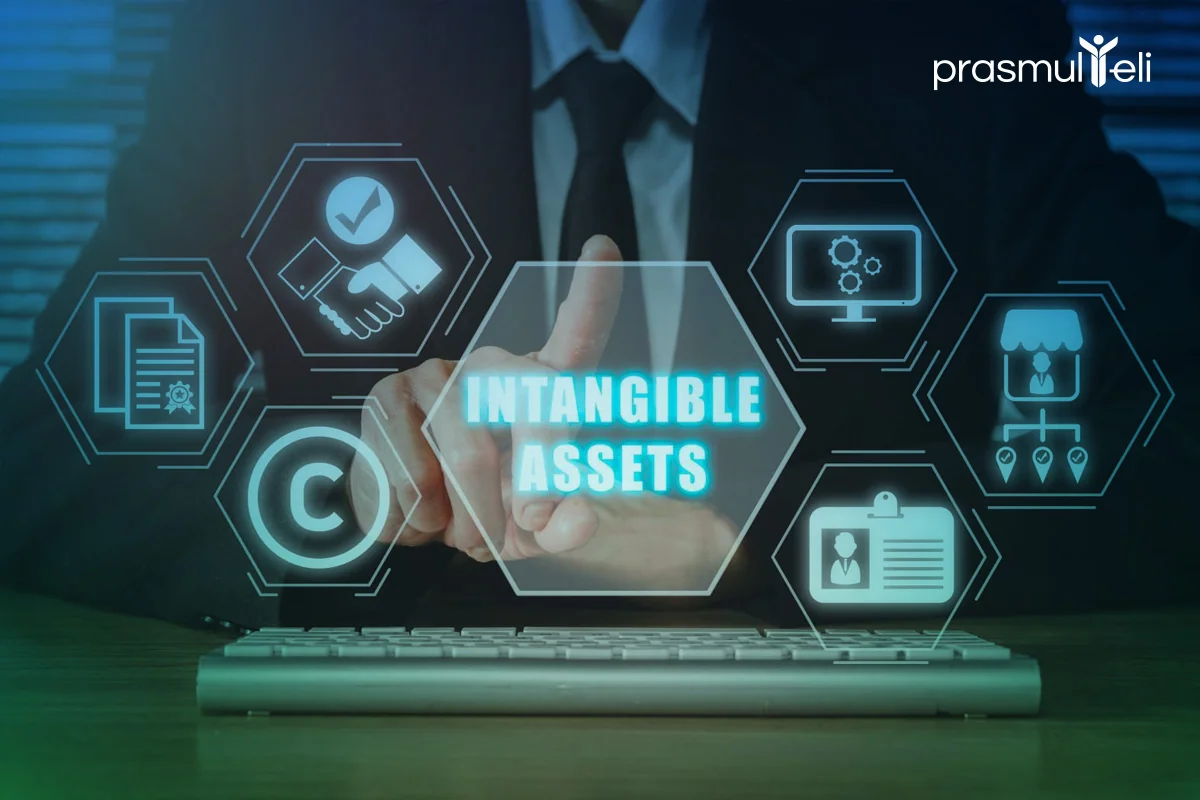
This shift is clearly evident among global companies whose market value far exceeds the value of their physical assets. A substantial proportion of the value of modern companies derives from intangible assets, assets capable of generating long-term economic benefits. As a result, understanding examples of intangible assets has become increasingly important for managers, investors, business owners, and finance professionals involved in strategic decision-making.
According to the International Accounting Standards Board, through IAS 38 Intangible Assets, an intangible asset is a non-monetary asset that is identifiable, lacks physical substance, and is controlled by an entity to generate future economic benefits. This standard serves as the international reference for the recognition, measurement, and reporting of intangible assets in company financial statements.
The significance of intangible assets is also increasingly apparent in corporate valuation practice. Research published by Ocean Tomo in its Intangible Asset Market Value Study indicates that the majority of the market value of publicly listed companies now derives from intangible rather than tangible assets. These findings reflect a fundamental shift in how companies create value, particularly in the technology, pharmaceuticals, media, financial services, and digital economy sectors.
This phenomenon is driven by the rise of the knowledge economy. The Organisation for Economic Co-operation and Development explains that innovation, research and development, software, data, and intellectual capital have become the primary drivers of productivity and growth for modern enterprises. In this environment, an organization’s ability to manage intangible assets often determines the difference between a company that merely survives and one that becomes a market leader.
At the same time, many organizations still face challenges in identifying and measuring the value of intangible assets. Unlike physical assets, which can be relatively easily assessed based on acquisition cost or market value, assets such as brands, copyrights, customer relationships, and technologies require more complex valuation approaches. For this reason, an understanding of the characteristics, benefits, and examples of intangible assets has become an essential component of modern business management.
“Intangibles are the major drivers of enterprise value and economic growth.” — Baruch Lev, Professor of Accounting and Finance, New York University Stern School of Business
This statement affirms that intangible assets are no longer merely supplementary to a company’s operations — they have become the primary source of value creation and economic growth. Organizations that can effectively develop, protect, and manage their intangible assets, therefore, have a greater opportunity to enhance their competitiveness and long-term company value.
This article will explore the definition of intangible assets, their strategic benefits for companies, as well as the various types and examples of intangible assets most commonly encountered in business practice and company valuation.
Before examining specific examples of intangible assets, it is important to understand what intangible assets are and why they play such a critical role in the modern business world. Although they have no physical form, intangible assets are often the primary source of competitive advantage and value creation for companies.
According to IAS 38, published by the IFRS Foundation, an intangible asset is a non-monetary asset that is identifiable, lacks physical substance, and is controlled by an entity as a result of past events to generate future economic benefits. This definition forms the basis for the recognition and reporting of intangible assets in financial statements.
Intangible assets are economic resources that have no physical form but provide economic benefits to a company, both in the short and long term. Unlike machinery, buildings, or vehicles, the value of intangible assets derives from legal rights, knowledge, innovation, reputation, and the business relationships a company holds.
For example, a technology company may have relatively modest physical assets, yet possess software, algorithms, databases, and a brand of very high value. Similarly, a pharmaceutical company may rely on patents arising from its research activities as its primary revenue source. This illustrates the extent to which the value of modern companies is increasingly determined by non-physical assets capable of creating competitive advantage.
IAS 38 establishes several key characteristics that must be present for an asset to be classified as an intangible asset.
First, the asset must be identifiable, meaning it can be separated from other assets or arises from contractual or other legal rights. Second, the company must have control over the asset, enabling it to obtain the economic benefits and restrict others from using it. Third, the asset must be capable of generating future economic benefits, whether in the form of increased revenue, cost efficiencies, or competitive advantage.
These three characteristics distinguish intangible assets from general knowledge or reputation that does not meet the criteria for recognition as an asset under accounting standards.
The most fundamental distinction between tangible and intangible assets lies in their physical existence. Tangible assets such as buildings, machinery, vehicles, and inventories can be seen and touched, whereas intangible assets have no physical form.
Their management and measurement also differ. The value of tangible assets can generally be determined through acquisition cost or market value. Intangible assets, by contrast, often require specialized valuation approaches because their value is influenced by factors such as innovation, brand strength, legal rights, and the prospects for future economic benefits.
This distinction makes intangible assets one of the most challenging aspects of the corporate valuation process.
Not all non-physical assets may be recognized as intangible assets in financial statements. IAS 38 stipulates that an asset may only be recognized if the entity can demonstrate that it is probable that future economic benefits will flow from the asset, and that its cost can be measured reliably.
For example, a patent acquired from a third party can generally be recognized as an intangible asset because it has a clearly defined transaction value. By contrast, internally generated company reputation typically cannot be recognized as an asset, since it is difficult to measure reliably and to separate from the business as a whole.
An understanding of these criteria is essential for companies to prepare financial statements in compliance with applicable accounting standards.
In valuation practice, intangible assets are often among the largest contributors to company value. This is particularly true for companies that rely on innovation, technology, intellectual property, or brand strength as their primary revenue sources.
The International Valuation Standards Council (IVSC) notes that the valuation of intangible assets requires an approach that accounts for economic benefits, risks, and the asset’s capacity to generate future cash flows. Accordingly, the valuation of intangible assets is an important component of mergers and acquisitions, financial reporting, and business strategy development.
Despite their substantial economic value, intangible assets are not always straightforward to measure. The absence of active markets for most non-physical assets means that companies must employ valuation approaches such as the income approach, market approach, or cost approach.
In addition, technological developments and shifts in customer preferences can significantly affect the value of intangible assets. A highly valuable brand today may lose its value if the company fails to innovate or maintain its reputation.
For this reason, companies must manage their intangible assets not only from an accounting perspective, but also as a component of long-term business strategy. The following section examines the various benefits of intangible assets for companies and how they can enhance competitiveness, company value, and business strategy.
Having understood the definition and characteristics of intangible assets, the next step is to examine why these assets have become one of the most decisive factors in the success of modern enterprises. In a knowledge economy, an organization’s ability to create, develop, and manage intangible assets is often more important than the ownership of physical assets.
According to Baruch Lev, intangible assets are the primary driver of company value creation because they generate competitive advantages that are difficult for competitors to replicate. This view is increasingly relevant as many global companies derive the majority of their market value from innovation, technology, brands, data, and intellectual capital.
The following outlines the primary benefits of intangible assets for companies.
One of the most significant benefits of intangible assets is their capacity to increase enterprise value. In many industries, particularly technology, pharmaceuticals, media, and services, assets such as brands, software, patents, and customer relationships contribute enormously to company valuation.
When investors assess a company, they consider not only its physical assets, but also its capacity to generate future cash flows through those intangible assets. The greater the potential economic benefits that can be realized, the higher the company’s value in the eyes of investors and prospective buyers.
Research by Ocean Tomo indicates that more than 90% of the market value of companies in the S&P 500 index now derives from intangible assets. This shift reflects a fundamental move in the source of value creation, from physical assets toward innovation, intellectual property, technology, and brands.
Intangible assets help companies build competitive advantages that are more difficult to replicate than physical assets. A competitor may be able to purchase identical machinery, but cannot easily replicate brand reputation, organizational culture, or long-standing customer relationships.
This advantage enables companies to sustain their market position over the long term. When intangible assets are well managed, companies achieve stronger differentiation and can compete effectively even under pricing pressure or when new entrants emerge.
McKinsey & Company notes that companies that successfully develop knowledge-based assets tend to demonstrate greater capacity for innovation and growth compared to those relying solely on tangible assets.
Many intangible assets arise from research and development activities. Patents, copyrights, software, algorithms, and product designs provide legal protection while enabling companies to capture the economic benefits of their innovations.
Through such protection, companies have an incentive to continue investing in innovation, as the results of their research can be commercialized without being immediately replicated by competitors. This is particularly important in industries that depend on technological and product development.
According to the World Intellectual Property Organization, intellectual property protection promotes innovation, strengthens competitiveness, and helps companies create sustainable economic value.
Strong brands, company reputation, and customer relationships are examples of intangible assets that play a significant role in building consumer loyalty. Customers who have had positive experiences with a brand tend to make repeat purchases, recommend the brand to others, and show greater tolerance toward price changes.
This loyalty delivers long-term advantages, as the company does not need to continuously incur substantial costs to acquire new customers. Strong customer relationships also enhance the stability of a company’s revenue. The Brand Finance report indicates that strong brands increase quality perception, build customer trust, and make a significant contribution to company value.
Modern investors pay increasing attention to intangible assets when evaluating a company’s prospects. Companies with strong patent portfolios, leading technologies, well-known brands, or loyal customer bases are generally regarded as having greater growth potential than companies relying solely on physical assets.
Intangible assets also signal that the company has the capacity to generate long-term cash flows through innovation, differentiation, and customer relationships, thereby enhancing investor confidence in the business’s prospects. In valuation practice, companies with strong intangible assets often receive higher valuations than those with larger physical asset bases but more limited growth prospects.
Another benefit of intangible assets is their capacity to support sustained company growth. Unlike physical assets, whose value tends to decline through depreciation, certain intangible assets, such as brands, software, or customer networks, can actually increase in value when managed effectively.
For example, investment in technology development, digital transformation, or customer experience enhancement can strengthen a company’s competitive position for years to come. The value generated is not limited to revenue growth but also includes operational efficiency and the ability to adapt to market changes.
The Organisation for Economic Co-operation and Development affirms that investment in knowledge-based assets, including software, data, design, and organizational capital, is one of the primary factors driving productivity and economic growth in the modern era.
Understanding the benefits of intangible assets is made easier when one is familiar with the forms they take in business practice. Not all intangible assets share the same characteristics — some arise from legal rights, while others are formed through business activities, innovation, or customer relationships.
The following describes the most common types and examples of intangible assets found in companies.
A brand is one of the most valuable intangible assets for many companies. A brand is not merely a name or logo, it also reflects reputation, perceived quality, and customer experience associated with a product or service.
Companies with strong brands typically enjoy higher customer loyalty, stronger bargaining power, and the ability to command premium pricing. For these reasons, brands are frequently valued as part of merger and acquisition transactions.
A patent grants a company the exclusive right to use or commercialize an invention for a specified period. This protection enables the company to capture the economic benefits of its innovations. The pharmaceutical, manufacturing, and technology industries are examples of sectors that are heavily dependent on the economic value of patents.
Copyrights protect intellectual works such as books, music, software, films, graphic designs, and digital content. This protection grants the creator or rights holder the exclusive right to exploit the work economically. In the digital economy, copyrights have become an important asset for media companies, software developers, creative industries, and digital content providers.
A trademark protects the identity of a product or service from use by third parties without authorization. This protection helps companies maintain their reputation and differentiate their products from competitors.
In many cases, the value of a trademark increases over time as customer trust in the company grows.
Software developed or owned by a company may also be classified as an intangible asset if it meets the recognition criteria under IAS 38. Examples include Enterprise Resource Planning (ERP) systems, mobile applications, digital platforms, and artificial intelligence-based algorithms. In addition to supporting operational efficiency, software can also serve as a revenue source when marketed as a commercial product.
A license grants a company the right to use specific technologies, brands, or intellectual property in accordance with an agreed arrangement. This right is frequently used to expand a business without the need to develop technology from scratch. Licenses are also an important asset in the pharmaceutical, entertainment, telecommunications, and technology industries.
A franchise right enables a company to use the business system, brand, and operational model owned by another party. The economic value of a franchise derives from brand reputation, operational standards, and the business support provided by the franchisor. Many retail and fast-food companies employ this model to accelerate market expansion.
Trade secrets encompass formulas, production methods, algorithms, or business information that provide a competitive advantage and are not publicly known. Unlike patents, the protection of trade secrets depends on the company’s ability to maintain their confidentiality. Business strategies, product recipes, and certain manufacturing processes are examples of assets frequently classified as trade secrets.
A loyal customer base and long-term contracts with customers can constitute highly valuable intangible assets. Such relationships enhance revenue stability while reducing the cost of acquiring new customers. In merger and acquisition transactions, customer relationships are often valued separately because they contribute directly to future cash flows.
Goodwill arises when a company acquires another entity at a price exceeding the fair value of its net assets. The difference reflects economic benefits that cannot be separately identified, such as reputation, organizational culture, or business synergies.
Unlike other intangible assets, goodwill is not amortized but is tested periodically through an impairment test in accordance with applicable accounting standards.
By understanding the various examples of intangible assets, companies can identify strategic resources that are often the primary determinants of competitive advantage and business value. Effective management of these assets not only strengthens the company’s market position, but also enhances the success of growth strategies, company valuation, and appeal to investors.
Intangible assets are non-monetary assets that have no physical form but are capable of generating economic benefits for a company in the future. According to IAS 38, published by the IFRS Foundation, such assets must be identifiable, controlled by the company, and have the potential to generate economic benefits. Examples include brands, patents, software, copyrights, and licenses that support business operations and growth.
Common examples of intangible assets held by companies include brands, patents, copyrights, trademarks, software, licenses, franchises, trade secrets, customer relationships, and goodwill. Each asset has distinct characteristics and economic benefits depending on the company’s business model. Effective management of these assets can enhance both competitiveness and company value.
Intangible assets help companies increase business value, create competitive advantage, support innovation, strengthen customer loyalty, and enhance their appeal to investors. In many modern companies, intangible assets contribute more to company value than physical assets. Accordingly, the management of intangible assets has become an integral part of long-term business strategy.
The value of intangible assets is generally measured using valuation approaches such as the income approach, market approach, or cost approach, depending on the characteristics of the asset and the availability of data. In corporate valuation practice, the method employed must take into account the asset’s capacity to generate future economic benefits, risk levels, and market conditions. Given the complexity of the process, companies often engage professional valuers to obtain results that are more accurate and well-substantiated.
An understanding of intangible assets helps companies identify strategic resources that contribute to value creation. In addition to supporting the preparation of financial statements in accordance with accounting standards, this knowledge is also important in company valuation, mergers and acquisitions (M&A), intellectual property management, and investment decision-making. By identifying and managing intangible assets optimally, companies can strengthen their competitiveness and sustain long-term business growth.
In the digital economy era, intangible assets such as brands, patents, software, data, and customer relationships have become one of the primary sources of competitive advantage for companies. However, possessing intangible assets alone is not sufficient. Organizations must also understand how to identify, measure, and assess the contribution of these assets to company value to make more informed business decisions.
The ability to conduct intangible asset valuation becomes increasingly important when a company seeks investors, pursues expansion, engages in merger and acquisition transactions, or develops a long-term growth strategy. By understanding the relationship between intangible assets, cash flows, cost of capital, and company value, management can allocate resources more effectively while enhancing sustainable business value.
If you wish to deepen your understanding of company valuation, the assessment of both tangible and intangible assets, Discounted Cash Flow (DCF) analysis, Weighted Average Cost of Capital (WACC), and other business valuation approaches, enroll in the Corporate Valuation program from prasmul-eli. This program is designed to help managers, finance professionals, analysts, consultants, and business owners master modern valuation techniques that can be directly applied to strategic decision-making and the enhancement of company value.



INSIGHT AND KNOWLEDGE
RECOMMENDATION ARTICLES


