
8 Types of AI Prompting Techniques for More Accurate and High-Quality Results
Aug 18, 2026
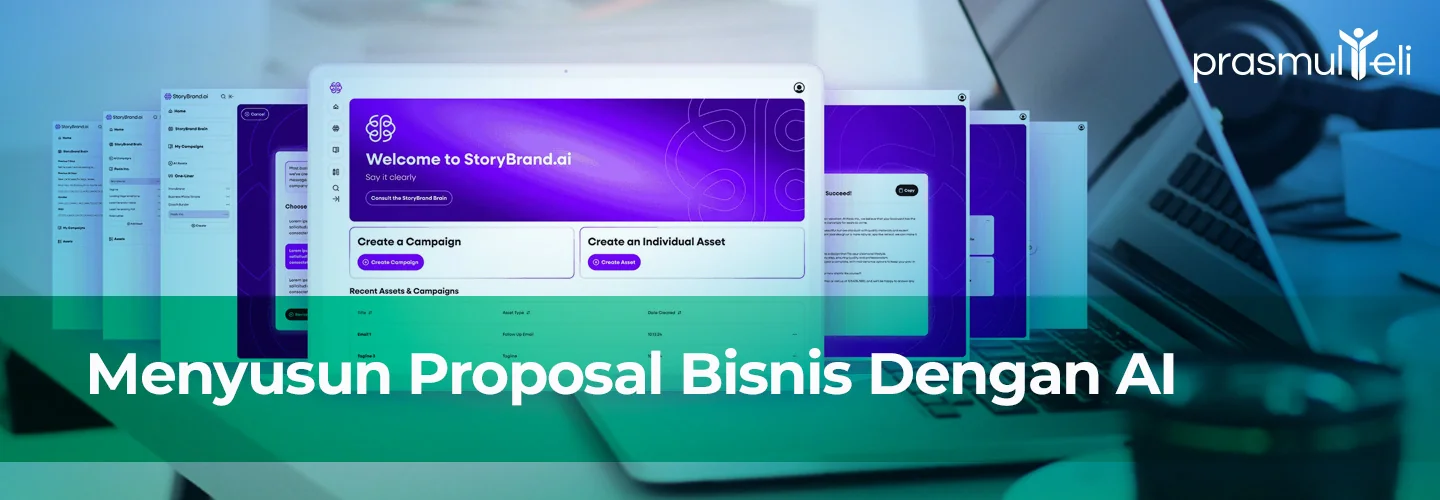

A business proposal is one of the most important documents for communicating ideas, offering solutions, securing funding, winning projects, and establishing partnerships with prospective clients and business partners. A well-crafted proposal not only outlines business objectives and plans but also demonstrates the organization’s credibility through logical argumentation, accurate data, and professional presentation. However, composing a comprehensive proposal often requires considerable time, particularly when research must be conducted, information must be processed, and the document must be tailored to the specific needs of each recipient.\
This challenge is compounded in a fast-paced business environment. Many professionals are expected to produce high-quality proposals within tight timeframes, without compromising accuracy or analytical rigor. As a result, the proposal drafting process often becomes a time-consuming task, particularly for managers, marketing teams, consultants, and business owners who must manage multiple projects simultaneously.
The advancement of Generative Artificial Intelligence (AI) has introduced a new approach to business document preparation. Today, a wide range of AI tools can help users create proposal outlines, summarize research findings, generate initial drafts, correct grammar, and adapt writing style to suit the characteristics of the intended audience. In this way, AI can reduce the burden of administrative work, freeing up more time for professionals to refine strategy, analysis, and decision-making.
The Work Trend Index 2025 report from Microsoft indicates that AI adoption is growing steadily across knowledge-based work activities. AI is being used to support document preparation, communication, information analysis, and the automation of various administrative tasks, enabling employees to focus more on activities that create value for the organization.
These findings are reinforced by the latest report from McKinsey & Company, which explains that Generative AI has the potential to significantly improve knowledge worker productivity, particularly in activities related to writing, analysis, and information synthesis. McKinsey emphasizes that AI is most effective when used as a copilot, helping humans organize ideas and accelerate workflows, rather than replacing professional judgment in decision-making.
At the same time, the use of AI in business proposal drafting still requires human oversight.
Business proposals typically contain strategic information, market analysis, financial data, and recommendations that will form the basis of key decisions. AI-generated content must therefore be verified to ensure it remains accurate, relevant, and aligned with both organizational objectives and the needs of the intended reader.
This is further supported by the research entitled “The Value, Benefits, and Concerns of Generative AI-Powered Assistance in Writing,” which demonstrates that AI can improve productivity and the quality of the writing process. However, the study affirms that users must still conduct a human review to verify factual accuracy, argument consistency, and contextual appropriateness before a document is put to use.
“AI is the ultimate amplifier of human ingenuity.” — Satya Nadella, CEO of Microsoft
This statement affirms that AI is not a substitute for human strategic thinking. In business proposal drafting, AI plays the role of a tool that accelerates the writing process, structures the document, and generates alternative ideas, while the quality of analysis, business strategy, and final decisions remains the responsibility of the proposal author.
This article will explore the benefits of using AI for business proposal drafting, introduce a range of AI tools that can be leveraged, and provide practical guidance on how to draft business proposals with AI to produce documents that are more professional, efficient, and capable of improving the likelihood of successful partnerships and business projects.
Leveraging AI in business proposal drafting not only helps accelerate the writing process but also improves the overall quality of the document. When used appropriately, AI can support multiple stages of proposal preparation, from idea generation through to final editing.
One of the primary benefits of AI is its ability to generate proposal outlines and drafts within minutes. Users simply provide context regarding the proposal’s purpose, company profile, target audience, and key information to be conveyed. Based on this input, AI can compose a systematic document structure, making the writing process significantly more efficient.
This capability is particularly valuable for consultants, marketing teams, project managers, and business owners who need to prepare multiple proposals simultaneously. By reducing the time spent on administrative work, professionals can focus more on refining strategy, analysis, and the value proposition to be offered to prospective clients or business partners.
According to Microsoft, the use of AI in knowledge-based work helps reduce the burden of routine tasks, giving employees more time to engage in activities that require creativity, collaboration, and decision-making.
A strong business proposal requires a clear narrative flow, encompassing background context, problem identification, proposed solutions, scope of work, pricing, and implementation schedule. AI can help organize this structure logically, making the proposal content easier for the reader to understand.
Beyond structuring, AI is also capable of enhancing language quality, correcting grammar, reducing sentence repetition, and making paragraphs more concise and professional. The result is a proposal that is easier to read and projects a more credible impression. Grammarly notes that AI can improve clarity, correctness, and engagement in written communication, making business documents more effective and accessible.
Proposal drafting often begins with the collection of information on the industry, market conditions, prospective client needs, and relevant trends. AI can help summarize information, organize key points, and provide an initial overview of the subject matter, accelerating the research process considerably.
That said, AI-generated research findings must still be verified against credible primary sources. This approach ensures that the proposal is supported by accurate data while minimizing the risk of incorporating irrelevant or outdated information.
A proposal directed at investors will naturally require a different approach from one addressed to prospective clients, government agencies, or strategic partners. AI can help adjust the writing style, level of formality, and thematic focus to match the characteristics of the intended audience.
This capability enhances the relevance of the communication while increasing the likelihood that the proposal will be understood and well received by its recipients.
In many organizations, proposal preparation involves multiple parties, including marketing, operations, finance, and management teams. AI helps accelerate the collaboration process by generating an initial draft that can be developed collectively, making team discussions more focused and productive.
This approach also reduces the time spent building a document from scratch and enables each team member to concentrate on providing input within their area of expertise.
The most significant benefit of using AI in proposal drafting is the overall improvement in productivity. When administrative tasks can be completed more quickly, professionals have more time to conduct analysis, develop strategy, build client relationships, and drive business innovation.
McKinsey notes that writing and information synthesis activities are among those with the greatest potential for productivity improvement through the application of Generative AI.
In the following section, you will explore the various types of AI tools available for drafting business proposals, as well as practical steps on how to draft proposals with AI to produce documents that are more professional, well-structured, and aligned with organizational needs.
As Generative Artificial Intelligence (AI) technology continues to advance, an increasing number of applications have been developed to help professionals prepare business documents more efficiently. Beyond generating proposal drafts, many AI tools are also capable of supporting preliminary research, structuring documents, correcting grammar, adapting writing style, and producing supporting presentations based on the proposal content.
Each AI tool, however, has distinct strengths and functions. Some are designed as general writing assistants, while others are directly integrated with productivity applications such as Microsoft Office or Google Workspace. Understanding the characteristics of each tool will therefore help you select the solution best suited to your organization’s needs.
The following outlines the most widely used AI tools for drafting business proposals.
ChatGPT is one of the most popular generative AI tools for producing a wide range of business documents, including partnership proposals, project proposals, investment proposals, and consultancy proposals.
Users simply provide a prompt describing the proposal’s purpose, company profile, target audience, scope of work, and desired outcomes. Based on this input, ChatGPT can help create a proposal outline, develop the content of each section, refine writing style, and even offer several alternative versions for the user to choose from.
In addition, ChatGPT can support brainstorming sessions, compose SWOT analyses, draft executive summaries, and craft more persuasive calls to action. OpenAI recommends providing clear context and specific prompts to ensure AI produces more relevant and higher-quality documents.
Microsoft Copilot is integrated with Microsoft Word, Excel, PowerPoint, and Outlook, making it particularly valuable for organizations operating within the Microsoft 365 ecosystem.
In business proposal drafting, Copilot can help create drafts based on existing documents, summarize meeting outcomes into proposal key points, build tables, generate charts from Excel data, and assist in preparing presentations based on proposal content.
This integration enables users to complete a wide range of activities without switching between applications, making the proposal drafting process considerably more efficient.
Microsoft explains that Copilot is designed to enhance worker productivity by reducing the time spent on administrative tasks and documentation.
Google Gemini offers AI capabilities integrated with Google Workspace, including Google Docs, Gmail, and Google Drive. In business proposal drafting, Gemini can help create document outlines, develop proposal content, summarize discussion outcomes, and provide language refinement recommendations directly within Google Docs.
A key advantage of Gemini is its support for real-time collaboration. Multiple team members can edit a document simultaneously while leveraging AI to accelerate the drafting process. This is particularly beneficial for organizations that work remotely or across multiple locations.
Grammarly is not only a grammar-checking tool; it has also developed generative AI features to help produce more professional business documents.
Once a proposal has been drafted, Grammarly can help improve sentence structure, enhance readability, sharpen argumentation, and adjust tone of voice to match the characteristics of the intended audience.
This feature is especially useful during the final editing stage, ensuring the proposal appears polished and professional before being submitted to prospective clients or investors. Grammarly Business explains that its AI is designed to enhance professional communication quality through improvements in clarity, correctness, engagement, and delivery.
Canva is now recognized not only as a graphic design platform but also as a provider of AI-powered features that support the preparation of proposals and business presentations.
Through AI, users can create more visually appealing proposal designs, generate supporting illustrations, produce automated presentations, and develop business plans based on user-provided information.
For companies that regularly present proposals to clients or investors, a professional visual design can enhance the document’s appeal while helping to communicate information more effectively. Canva explains that its AI Business Plan Generator is designed to help users compose business plans more quickly while producing documents that are ready for presentation.
Claude is a generative AI developed by Anthropic and is widely used to assist in drafting long-form documents with complex structures.
One of Claude’s key strengths is its ability to understand the context of lengthy documents, making it well suited for business proposals that include market analysis, feasibility studies, implementation strategies, and consultancy documents.
Anthropic also emphasizes the importance of responsible AI use, including safeguarding company data security and ensuring that a human verification process is in place before documents are put to use.
Having familiarized yourself with the available AI tools, the next step is to understand how to use them optimally. It is important to recognize that the quality of an AI-generated proposal depends heavily on the quality of the information and instructions provided by the user.
AI can accelerate the document drafting process, but the success of a proposal ultimately depends on the quality of the strategy, analysis, and the author’s understanding of the prospective reader’s needs.
The first step is to clearly define the proposal’s objective. Is it intended to secure a new project, offer consulting services, seek funding, propose a partnership, or obtain management approval?
A clearly defined objective helps AI generate a proposal structure that is better suited to the specific need, resulting in content that is more focused and easier to understand.
For example, rather than providing a general instruction such as “create a business proposal,” you might use a prompt such as:
“Draft a digital marketing partnership proposal for a manufacturing company, covering a six-month scope of work, written in a formal and professional tone.”
Before asking AI to draft the proposal, compile all the necessary information, including the company profile, client needs, scope of work, market data, implementation schedule, budget, and project success indicators. The more comprehensive the information provided to AI, the more relevant the resulting proposal will be.
The prompt is a critical determinant of the quality of AI output. Use instructions that clearly specify the proposal’s objective, target reader, document structure, desired length, writing style, and information that must be included. The more detailed the prompt, the fewer revisions will be required after the AI generates the first draft.
Before generating the full proposal content, ask the AI to create a document outline first.
A typical outline should cover:
This approach helps ensure the proposal’s narrative flow is appropriate before the content of each section is developed further.
Once the outline has been approved, ask AI to develop each section incrementally. This approach produces more consistent content compared to requesting the entire proposal at once. You may also provide feedback on each section to ensure the proposal content increasingly aligns with both organizational needs and the expectations of the prospective client.
Business proposals frequently include market data, industry statistics, and financial information. All AI-generated information must therefore be verified against credible primary sources before the proposal is submitted.
Research on AI writing assistance confirms that the human review process remains an essential step in maintaining the accuracy, credibility, and quality of professional documents.
Before the proposal is used, ensure that all document content is consistent with the company’s identity, including writing style, visual design, logo, corporate colors, and formatting standards.
This step helps establish brand consistency while reinforcing the organization’s professionalism in the eyes of prospective clients and investors.
The final step is to conduct a thorough review before the proposal is submitted. Check grammar, document structure, numerical data, attachments, and the alignment of content with the proposal’s objectives.
By combining AI capabilities with human review, you can produce a business proposal that is not only drafted more quickly but also demonstrates high quality, strong argumentation, and a greater likelihood of success in winning projects or securing business partnerships.
Ultimately, knowing how to draft a business proposal with AI is not simply about using technology to speed up the writing process. AI should be positioned as a working partner that helps develop ideas, enhances productivity, and organizes documents more systematically — while business strategy, analysis, and final decisions remain firmly in human hands.
Yes, AI can help draft a business proposal automatically based on the information and instructions (prompts) you provide. AI is capable of creating a proposal outline, developing the content of each section, correcting grammar, and adapting writing style to suit the target audience. However, AI-generated outputs must still be reviewed to ensure that the data, analysis, and recommendations are accurate and aligned with business objectives.
Some of the most widely used AI tools for drafting business proposals include ChatGPT, Microsoft Copilot, Google Gemini, Claude, Grammarly, and Canva AI. Each has distinct strengths, ranging from draft generation and language editing to proposal design and integration with productivity applications such as Microsoft 365 and Google Workspace. The choice of AI tool should be tailored to the company’s needs, the type of proposal, and the team’s workflow.
It is advisable not to do so. Although AI can produce well-structured proposals, you must still conduct a human review to verify data, ensure strategic alignment, and tailor the proposal content to the needs of the client or prospective investor. A final review is also essential to maintain consistency with the company’s identity and to ensure there are no errors or irrelevant information.
An effective prompt should explain the proposal’s purpose, company profile, target reader, scope of work, desired outcomes, writing style, and the required document format. The more detailed the information provided, the more relevant and well-structured the AI’s output will be. You may also ask the AI to generate several alternative outlines or proposal drafts to make it easier to select the most appropriate approach.
Using AI helps save time in proposal preparation, improves document structure quality, accelerates preliminary research, and produces language that is more professional and easier to understand. AI also supports team collaboration by providing an initial draft that can be collectively developed, making the proposal drafting process more efficient. When used appropriately, AI enables companies to boost productivity while producing more competitive proposals.
The ability to craft a compelling business proposal is one of the key factors in winning projects, securing funding, and building strategic partnerships. By leveraging Generative Artificial Intelligence (AI), the proposal drafting process can be carried out more quickly, from creating an outline and developing content, to refining language and producing a document that is more professional and accessible. To ensure the results truly add value to the organization, however, AI use must be combined with analytical capability, strategic thinking, and human verification.
In the era of digital transformation, professionals are not only expected to understand how to use AI, but also to know how to craft effective prompts, evaluate AI-generated outputs, safeguard company data, and apply responsible AI practices. These skills will help organizations harness AI optimally to improve productivity without compromising the quality of decision-making.
If you wish to learn how to leverage Generative AI to draft business proposals, produce professional documents, generate ideas more rapidly, optimize communication, and enhance day-to-day work productivity, enroll in the Working Smarter with Generative AI: Enhancing Personal Productivity at Work program from prasmul-eli. This program is designed to help professionals, managers, and team leaders master the practical, safe, and strategic application of generative AI, enabling them to achieve greater work efficiency while enhancing the quality of their outputs.


INSIGHT AND KNOWLEDGE
RECOMMENDATION ARTICLES


