
How to Become Assertive in the Workplace
Sep 11, 2026
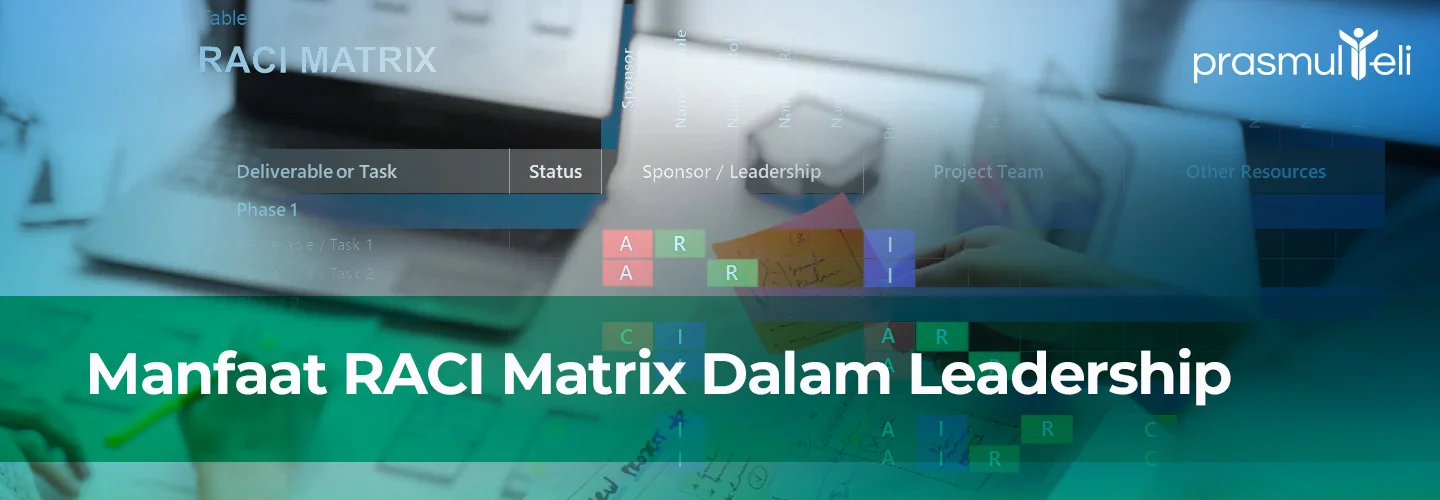

An organization's success is determined not only by the quality of its strategy, but also by a leader's ability to manage people, processes, and decision-making. As project complexity increases and cross-functional collaboration becomes more common, many organizations face challenges such as overlapping responsibilities, confusion over who should make decisions, and delays in completing work because team members' roles have not been clearly defined.
These situations often trigger internal conflict, reduce productivity, and slow an organization's progress toward its targets. It is not uncommon for a project to stall not because the team lacks the necessary competence, but because each member holds a different understanding of who is responsible for carrying out a task, who has the authority to make decisions, who needs to be consulted, and who simply needs to be kept informed. Without clarity of roles, collaboration that should accelerate work can instead become a source of confusion.
One management tool widely used to address this challenge is the RACI Matrix. This framework helps organizations define the role and responsibility of each individual within a project or business process, making communication more effective, strengthening accountability, and enabling faster decision-making. Beyond project management, the RACI Matrix is increasingly applied in leadership practice, organizational transformation, product development, and technology implementation.
According to the Project Management Institute (PMI), a Responsibility Assignment Matrix (RAM), which includes the RACI Matrix, is a practice that helps clarify the relationship between project activities and the individuals responsible for carrying them out. This clarity plays an important role in improving coordination, reducing ambiguity, and ensuring every piece of work has a clear owner from the outset of a project.
The topic of role clarity is becoming increasingly relevant in the context of modern organizations. A recent Harvard Business Review article titled “What Companies Get Wrong About Decision Rights” explains that many organizations experience delayed execution not because they lack strategy, but because decision rights have not been clearly defined. When there is no clarity about who has the authority to make a decision, business processes slow down, and cross-team coordination becomes less effective.
Microsoft's 2025 Work Trend Index report likewise shows that digital transformation and the growing use of AI are making work patterns increasingly collaborative. Teams now work across functions, locations, and even countries. Under these conditions, role clarity becomes even more essential, ensuring that every member understands their responsibilities while being able to collaborate effectively without creating duplicated work or conflicts over authority.
This view is reinforced by McKinsey & Company, which explains that organizations with effective collaboration tend to achieve higher productivity because they are able to clarify roles, accelerate coordination, and improve the quality of decision-making. In this context, the RACI Matrix is one of the tools that supports the creation of stronger team governance.
“Management is doing things right; leadership is doing the right things,” a statement by Peter Drucker, writer, management consultant, and social ecologist.
This statement underscores that a leader's role is not simply to ensure work gets done, but also to ensure that each person is doing the right task with a clear level of responsibility. The RACI Matrix helps put this principle into practice through a systematic allocation of roles, allowing every team member to understand their contribution to shared objectives.
This article will walk you through what the RACI Matrix is, the various benefits it offers in leadership, and how to build a RACI Matrix that can be applied to improve leadership effectiveness, team collaboration, and organizational success.
The RACI Matrix is one of the most widely used tools for defining roles within a project or business process. Through this framework, every team member clearly understands their responsibilities, making coordination more effective and minimizing the risk of errors caused by overlapping work.
The RACI Matrix is a framework used to clarify who is responsible for carrying out a piece of work, who is accountable for the final outcome, who needs to be consulted before a decision is made, and who must be kept informed of the work's progress.
The name RACI is an acronym for four core roles: Responsible, Accountable, Consulted, and Informed. These four roles help organizations create a more systematic division of labor, ensuring every activity has a clear owner.
According to PMI, the RACI Matrix falls under the category of Responsibility Assignment Matrix, which aims to link project activities to the individuals or groups responsible for carrying them out.
The first component is Responsible, referring to the individual or team that directly carries out the work. They are responsible for completing the task within the defined scope.
The second component is Accountable, referring to the party who holds ultimate responsibility for the outcome of the work and has the authority to make decisions. Best practice dictates that each activity should have only one Accountable party, to avoid confusion in the decision-making process.
Meanwhile, Consulted refers to the party who provides input, expertise, or considerations before a decision is made. Informed, on the other hand, refers to the party who needs to receive updates on the work's progress without being directly involved in the decision-making process.
For a leader, a team's success depends not only on individual ability but also on how clearly roles are divided. When every member understands their responsibilities, coordination becomes easier, and the leader can focus more on developing strategy rather than resolving conflicts caused by unclear task ownership.
Beyond strengthening accountability, the RACI Matrix also helps leaders build a transparent work culture. Team members know whom they should report to, who has the authority to make decisions, and when they need to involve other parties in the course of their work. This strengthens trust while also accelerating cross-functional collaboration.
A typical task assignment usually explains only who will carry out a given piece of work. The RACI Matrix, by contrast, offers a more complete picture, as it explains each party's relationship to a specific activity, including who makes the decision, who must be consulted, and who simply needs to receive information.
This approach helps avoid situations in which too many people feel entitled to make a decision, or conversely, no one truly feels responsible for the final outcome of a piece of work.
The RACI Matrix can be applied in a variety of situations, such as executing strategic projects, digital transformation, developing new products, implementing information technology systems, formulating organizational policy, and managing business processes that involve multiple functions.
The more complex a piece of work and the more parties involved, the greater the benefit of using a RACI Matrix. With clear role allocation established from the outset, organizations can reduce miscommunication while improving the efficiency of work execution.
Although relatively simple, implementing a RACI Matrix does not always go smoothly. One common challenge is assigning too many Accountable roles to a single activity, which slows the decision-making process.
In addition, a RACI Matrix needs to be reviewed periodically, since changes in organizational structure, business priorities, or team composition can cause a role allocation that was once effective to become less relevant. Leaders must therefore ensure that the RACI Matrix is kept up to date in line with organizational needs.
In the following section, you will learn about the various benefits of the RACI Matrix in leadership, from strengthening accountability and accelerating decision-making to reducing role conflict and reinforcing cross-functional collaboration within an organization.
Amid rising organizational complexity, a leader's role is no longer limited to directing a team toward its targets; it also involves ensuring that every member understands their role, responsibilities, and limits of authority. Without a clear allocation of roles, an organization risks duplicated work, conflicting responsibilities, and delayed decision-making.
In this context, the RACI Matrix is one of the tools that helps leaders build a more structured way of working. By defining who is Responsible, Accountable, Consulted, and Informed for each activity, an organization can strengthen coordination while reinforcing accountability at every level.
According to the Project Management Institute (PMI), a Responsibility Assignment Matrix helps link project activities to the individuals responsible for them, minimizing role ambiguity and improving the effectiveness of project coordination.
The primary benefit of the RACI Matrix is that it helps every team member clearly understand their responsibilities. Once each activity has a documented role allocation, team members no longer need to guess who should carry out a task or whom to contact when facing an obstacle.
For a leader, this clarity helps reduce miscommunication from the very start of a project. Each individual knows the scope of their work, minimizing the risk of tasks being overlooked or duplicated by two people at once.
In leadership practice, accountability is a core foundation for building a healthy work culture. The RACI Matrix helps ensure that every activity has a single Accountable party, the individual responsible for the final outcome and authorized to make decisions.
This approach reduces the tendency to shift blame when problems arise. Beyond clarifying who should make a decision, the RACI Matrix also makes it easier for leaders to evaluate each individual's performance based on agreed-upon responsibilities. PMI recommends that each activity have only one Accountable party to avoid confusion in the decision-making process.
One common cause of project delays is a lack of clarity about who has the right to make decisions. When too many parties feel they have authority, discussions drag on and decisions are frequently postponed.
With a RACI Matrix, a leader can explicitly designate who has the authority to approve a decision (Accountable) and who needs only to provide input (Consulted). This clarity helps an organization respond to change more quickly without compromising decision quality.
A recent Harvard Business Review article on decision rights emphasizes that organizations frequently lose execution speed because decision rights have not been clearly defined.
Conflict within a team is often caused not by differences of opinion, but by unclear responsibilities. Two people may both feel responsible for the same piece of work, or conversely, no one may feel responsible for it at all.
The RACI Matrix helps reduce this by providing clear boundaries around who carries out a task, who makes the decision, who needs to be involved in the discussion, and who simply receives information. As a result, working relationships become more harmonious and collaborative.
Many modern organizations rely on cross-departmental collaboration to carry out strategic projects. In these situations, coordination becomes more complex, as it involves multiple functions with differing priorities.
The RACI Matrix helps align everyone's understanding of each party's contribution. Marketing, operations, finance, information technology, and human resources teams can all understand when they need to play an active role and when it is sufficient to simply provide support or receive information.
The Microsoft Work Trend Index report shows that modern organizations are increasingly reliant on cross-functional collaboration, making role clarity an important factor in improving work effectiveness.
Effective communication does not mean everyone needs to know everything. Rather, each individual needs to receive information relevant to their role.
Through the Consulted and Informed components, the RACI Matrix helps leaders determine who needs to be involved in a discussion and who simply needs to receive an update. This approach makes communication more targeted, reduces information overload, and accelerates coordination.
When every team member understands what they need to do, work can proceed more smoothly, with less time wasted clarifying responsibilities. This allows a team to focus more on completing the work rather than repeatedly discussing how tasks should be divided.
Beyond improving operational efficiency, a clear allocation of roles also helps leaders distribute workload more evenly, reducing the risk of burnout or work piling up on specific individuals.
McKinsey explains that organizations with a clear collaboration structure tend to achieve higher productivity, as they are better able to reduce coordination bottlenecks and accelerate the completion of work.
The RACI Matrix also offers benefits in the performance evaluation process. Because every responsibility is clearly documented, leaders can assess an individual's contribution based on the role they were actually responsible for.
This approach helps create a more objective evaluation system while simplifying the process of giving feedback, developing competencies, and planning leadership succession. Every team member knows what the organization expects of their role, making the development process more focused.
Having covered the various benefits of the RACI Matrix in leadership, the next step is to understand how to build an effective one. Although the concept itself is relatively simple, building one requires cross-functional discussion to ensure the role allocation genuinely reflects the organization's actual conditions.
In general, the process of building a RACI Matrix begins with identifying the key activities to be carried out, followed by determining all parties involved in that work. Each activity is then assigned a designation of R (Responsible), A (Accountable), C (Consulted), or I (Informed), according to each individual's level of involvement.
The following section covers the practical steps for building a RACI Matrix, from identifying activities and determining stakeholders to assigning RACI roles, validating them with the team, and periodically evaluating implementation to keep it relevant to organizational needs.
The first step in building a RACI Matrix is identifying all the key activities involved in a project or business process. These activities may include planning, execution, monitoring, and evaluation stages. The more detailed the list of activities, the easier it is for an organization to define who is responsible at each stage.
For example, in a new system implementation project, key activities might include needs analysis, budget planning, system development, testing, user training, and final implementation. All of these activities will later become the rows of the RACI Matrix table.
Once the activities have been identified, the next step is to determine all the individuals, positions, or departments involved. It is best to use job titles rather than individual names in a RACI Matrix, so that it remains relevant even when personnel change.
Stakeholders may come from various functions, such as project managers, department heads, operations teams, information technology teams, finance, marketing, and senior management. By identifying all involved parties from the outset, a leader can ensure that no important function is overlooked in the course of the work.
The next step is to assign the roles of Responsible (R), Accountable (A), Consulted (C), and Informed (I) to each activity.
A commonly used general guideline is as follows:
● Responsible (R): the party that carries out the work.
● Accountable (A): the party responsible for the final outcome and authorized to make decisions.
● Consulted (C): the party asked for input before a decision was made.
● Informed (I): the party that receives information about the work's progress.
In best practice, each activity should have only one Accountable party, so that the decision-making process does not become confusing. According to the Project Management Institute (PMI), clarity in the allocation of responsibilities is one of the key factors in improving project effectiveness and reducing role ambiguity.
Once the role allocation has been drafted, hold a discussion session with all involved parties. The goal is not merely to obtain approval, but also to ensure that every team member understands the expectations attached to their role.
This validation stage often produces valuable input, for example, when an activity turns out to require consultation from another function, or when the workload on one party is too heavy. By involving the team from the outset, implementing the RACI Matrix becomes easier to accept.
A RACI Matrix provides no benefit if it is simply filed away as an administrative document. The results must therefore be properly documented and communicated to the entire team before the project begins.
This document can be placed in a project management system, a shared workspace, or a collaboration platform so that it is easily accessible to all relevant parties. In this way, every team member has the same reference when carrying out their work.
An organization's structure or a project's scope can change over time. The RACI Matrix therefore needs to be evaluated periodically to ensure the role allocation remains relevant to current conditions.
For example, when an organization forms a new department, changes its reporting structure, or expands a project's scope, the role allocation within the RACI Matrix needs to be adjusted accordingly. Periodic evaluation helps maintain coordination effectiveness while ensuring every activity continues to have a clearly defined owner.
Below is a simple example of a RACI Matrix applied to a new product launch project.
| Activity | Project Manager | Marketing Manager | Product Team | CEO |
| Market analysis | A | R | C | I |
| Product development | C | I | R/A | I |
| Marketing strategy development | C | R/A | C | I |
| Budget approval | C | C | I | A |
| Product launch | R | R | C | I |
This example shows that not every party needs to be involved in every activity. A clear allocation of roles helps accelerate coordination while ensuring every decision has a party accountable for it.
Implementing a RACI Matrix should not be viewed merely as a project administration tool. For a leader, it is an instrument for building a more transparent work culture, clarifying expectations, strengthening accountability, and creating more effective collaboration. When every team member understands their role from the outset, an organization becomes better prepared to navigate change while executing its strategy more quickly and consistently.
The RACI Matrix is a management tool used to clarify the allocation of roles and responsibilities within a project or business process. RACI stands for Responsible, Accountable, Consulted, and Informed, each of which denotes a person's level of involvement in a given activity. With a clear allocation of roles, an organization can improve coordination while reducing the risk of misunderstanding.
The RACI Matrix helps leaders ensure that every team member understands their tasks, responsibilities, and authority. This clarity strengthens accountability, accelerates decision-making, and reduces conflict arising from overlapping roles. It also allows leaders to focus more on developing strategy, since the coordination process runs more effectively.
Responsible refers to the party that directly carries out a task, while Accountable refers to the party responsible for the final outcome and authorized to approve or make decisions. In best practice, each activity should have only one person holding Accountable status. This helps avoid confusion in the decision-making process.
A RACI Matrix is particularly useful when an organization is running cross-functional projects, digital transformation initiatives, new system implementations, product development efforts, or business processes involving many parties. The more complex the work and the more stakeholders involved, the greater the benefit of using a RACI Matrix. This framework helps keep coordination on track from the planning stage through to evaluation.
No. Although it originated in project management practice, the RACI Matrix is now widely used in leadership, organizational development, operations management, corporate governance, and business transformation. Its core principle is to clarify responsibilities so that collaboration and decision-making can run more effectively across a variety of organizational contexts.
A leader's success is determined not only by their ability to formulate strategy, but also by their ability to build a work system that is clear, collaborative, and accountable. The RACI Matrix is one tool that can help clarify role allocation, strengthen cross-functional coordination, accelerate decision-making, and create a more transparent work culture.
However, implementing a RACI Matrix effectively requires more than simply understanding the concept. Leaders also need to master communication, delegation, decision-making, conflict management, and team development skills so that every member is able to carry out their role optimally. Combining the right management tool with strong leadership competencies will help an organization achieve more consistent results.
If you wish to develop your capabilities as a first-line leader, build more effective team collaboration, and strengthen your ability to manage team responsibilities and performance, join the First Line Leadership: Becoming Effective Leader program offered by prasmul-eli. This program is designed to help supervisors, coordinators, and new managers develop the practical leadership skills needed to lead their teams effectively, improve productivity, and achieve organizational goals.



INSIGHT AND KNOWLEDGE
RECOMMENDATION ARTICLES


