
How to Become Assertive in the Workplace
Sep 11, 2026

Employee performance is shaped not only by systems and targets, but also by motivation. In organizational settings, motivation is generally discussed in two major forms: intrinsic motivation and extrinsic motivation.
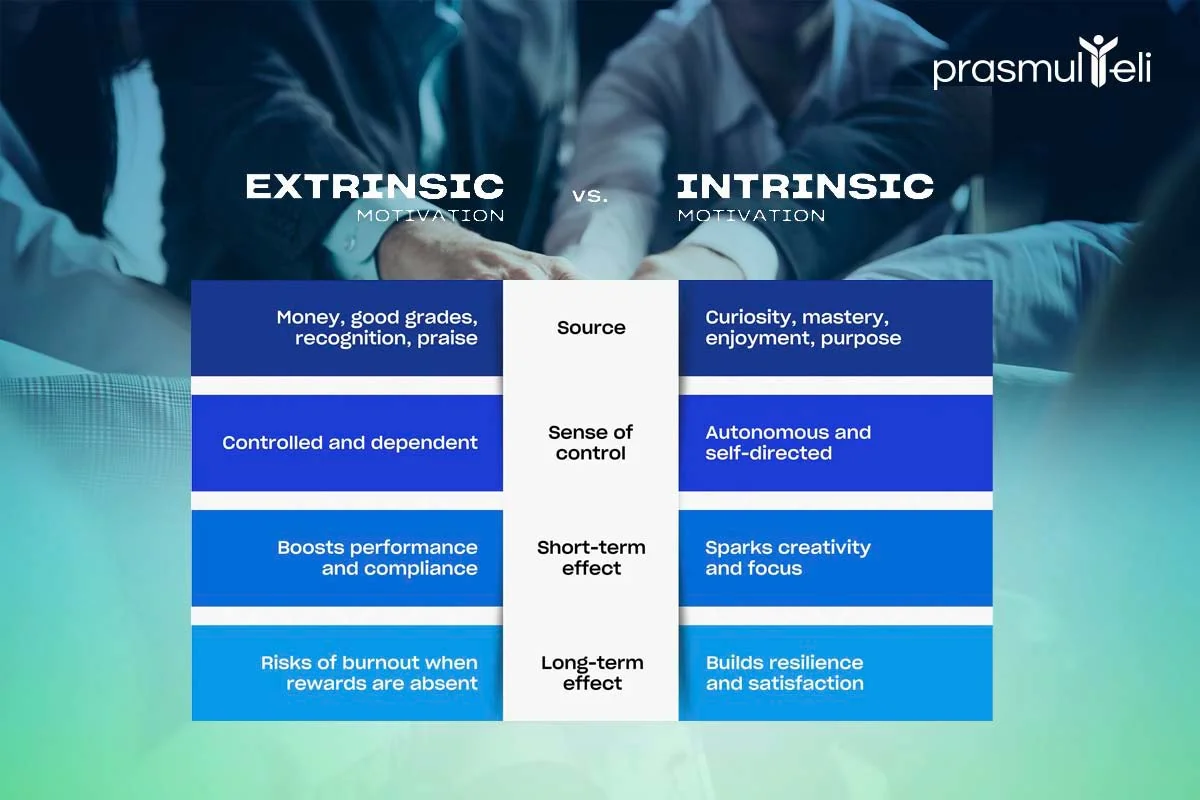
Intrinsic motivation comes from within. Employees are driven by achievement, growth, meaning, and personal satisfaction in the work itself.
Extrinsic motivation comes from outside rewards such as compensation, bonuses, recognition, or promotion.
Employees often feel motivated when they successfully complete challenging work and can see the value of what they have accomplished.
Many people are motivated by opportunities to learn, improve, and master new skills.
Employees are more engaged when they believe their work matters and contributes to something bigger than routine output.
Financial rewards can be effective in encouraging performance, especially when linked clearly to measurable outcomes.
Public recognition, appreciation from leaders, and visible acknowledgment can strongly reinforce performance and commitment.
Clear pathways for advancement often motivate employees to stay focused, develop capability, and contribute more consistently.
Organizations achieve better outcomes when intrinsic and extrinsic motivation are managed together. Financial reward alone is rarely enough for long term engagement. Employees also need purpose, learning, and a sense of achievement.
Leaders who understand this balance can build stronger cultures, improve performance, and sustain motivation more effectively.
Knowing the difference between intrinsic and extrinsic motivation helps leaders design better management systems and more engaging work environments.
For professionals who want to strengthen self-leadership and understand motivation more deeply, prasmul-eli offers relevant development programs to support stronger performance and leadership capability.


INSIGHT AND KNOWLEDGE
RECOMMENDATION ARTICLES


